
Form
and Substance

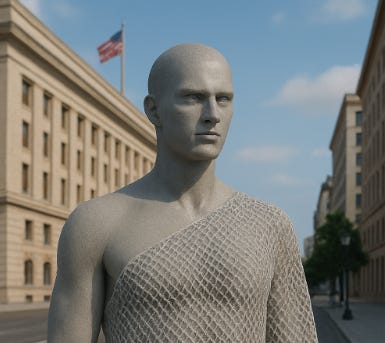
(Image by ChatGPT prompted by the author)
A journalism digest
Government by the People
Today’s first item is not directly related to journalism, I admit. But it’s important to share for other reasons.
Video:
Key selections from On Tyranny read by John Lithgow, for viewing and sharing (Substack)

What We're Doing in 2025 to Strengthen Local Journalism (freepress.net)
And though this work is challenging, we have good reason to be hopeful. People are innovating, organizing and fighting for the media system they want and deserve. And we’re holding on to the many examples across the United States of determined local-news advocates who are making the world a better place.
[No Headline]
September 1, 2025
Supporting the media blackout on the killing of journalists in Gaza (Substack) by Carole Cadwalladr
Mark Cuban discusses why he hates the media business, and why he thinks AI is the biggest threat to media and politics. (Semafor Media)
Cuban’s interview is the 3rd item down the page
Podcast:
Audio & Transcript are available on the page
Through to Thriving: Pursuing The Truth with Dr. Jasmine McNealy and Naomi Nix (techpolicy.press)
For this episode, I spoke with Dr. Jasmine McNealy, an attorney, critical public interest technologist, and professor in the Department of Media Production, Management, and Technology at the University of Florida, and Naomi Nix, a staff writer for The Washington Post, where she reports about technology and social media companies.
We talked about how they found themselves on the path through journalism and into tech policy, the distinctions between truth and facts and whether there has ever been such a thing as a singular truth, how communities of color have historically seen and filled the gaps in mainstream media coverage, the rise of news influencers, and how journalists can regain the trust of the public.
Enter the Young
Stories from Detroit journalism summer camp students (planetdetroit.org)
Each summer, high school students from across Detroit take part in the Detroit Journalism Summer Camp, run by The Detroit Writing Room in partnership with Planet Detroit.
Over two weeks, students learn the fundamentals of reporting, interviewing, and storytelling. With coaching from professional journalists, they produce stories that reflect their neighborhoods, concerns, and hopes for the future.
This collection showcases their published work. You’ll find stories that highlight challenges, celebrate community resilience, and shine a light on the issues Detroiters face every day.
A sample of the headlines from the 13 stories featured:
Diabetes is hitting teens hard—can they fight back?
One lap at a time: How swimming brings seniors health and happiness
The ‘D1 or Bust’ mindset: Impacts on young athletes’ mental health
Amid federal cuts, Hey Y’all Detroit offers a story of hope
3 things I learned while interning at CalMatters that every journalism student should know (calmatters.org)
Online at @CalMatters
by Sarah Calixto
Sarah’s first lesson:
Newsrooms need to find ways to break down how “big” news will affect their local audience. During my internship, I saw reporter Kristen Hwang break down how the federal government’s new budget made significant changes to Covered California, which experts and insurers both said would make health insurance cost more for consumers. The spending bill had thousands of repercussions to dissect and discuss, but zeroing in on how it would affect one crucial part of people’s lives helped CalMatters cut through the noise. I then “translated” Kristen’s story into an accessible, easy-to-digest Instagram post in order to reach even more Californians where they are, and focused on highlighting tangible details from the story, like how premiums are expected to increase by 66% or $101 per month starting next year.
(Emphasis mine)
Protecting the U.S. Press
Foundations Commit $36.5 Million in Emergency Funding to Protect Public Media in Vulnerable Communities (knightfoundation.org)
Knight Foundation, Pivotal, the MacArthur Foundation, Ford Foundation, the Schmidt Family Foundation and Robert Wood Johnson Foundation call on others to join them in supporting local public radio and television stations after loss of federal funding.
The PRESS Act and What It Could Mean for Journalists (thefulcrum.us)
By Amy Wong
Amy L. Wong…is also an incoming graduate student at Northwestern pursuing a Master of Science in Journalism with a Specialization in Politics, Policy, and Foreign Affairs.
Bolstering journalists’ rights continues to be a concern in the U.S. A day after the PRESS Act was rejected in the Senate, the U.S. Department of Justice reported that federal prosecutors seized journalists’ phone records against department rules during the first Trump administration.
On June 5, an Australian reporter was shot with a nonlethal round by an officer while covering protests in Los Angeles. While the PRESS Act may not have passed, groups advocating for journalist rights may seek other legislative opportunities to provide similar protections while balancing concerns about national security and misinformation.
Beneath the Surface
Following the Threads
What’s behind the coverage of Volodymyr Zelensky’s suit? (Columbia Journalism Review)
By Jon Allsop
He is a freelance journalist whose work has appeared in the New York Review of Books, The New Yorker, and The Atlantic, among other outlets. He writes CJR’s newsletter The Media Today.
At the top, this story may appear to lack substance. Certainly the difference in Volodymyr Zelensky’s attire in two different White House visits was notable (after his attire was called out – “disrespecting the office of the U.S. president by not wearing a suit” – in February in a video by Brian Glenn – an insult which was amplified in other media).
But is a change of clothing worth 11 paragraphs? Not in this case.
The substance occurs as Jon Allsop in paragraph six turns the story toward the Zelensky administration’s behavior toward journalists and the coverage of the administration.
But since I wrote, press-freedom concerns have continued. Last April, Yevhen Shukhat, a journalist with Slidstvo.Info who was investigating a top security official at the time, reported being approached by military officers with an order to report to an enlistment office, which Slidstvo interpreted as an attempt at retaliation; the following month, Ukrainska Pravda, one of the country’s top independent news outlets, reported that the then-head of Ukrinform, a state news agency, had ordered staff not to talk to certain opposition politicians and other critics. (One Ukrinform reporter who spoke publicly about the edict himself reported receiving a draft-related notice soon afterward.)
In October, Ukrainska Pravda complained that Zelensky’s office was applying “systematic pressure” on its reporters, including by “blocking officials from communicating with Ukrainska Pravda journalists” and putting “pressure on businesses to stop advertising cooperation” with the outlet.
In December, the Committee to Protect Journalists wrote to Zelensky, acknowledging “the immense challenges facing your government in the midst of war” but also expressing concern about “signals pointing to an unwarranted attempt by the Ukrainian government to control the media and stifle investigative journalism.” The letter may not have made much of a difference; in February, CPJ reported that the security services had opened a criminal case for “disclosure of state secrets” after Ukrainska Pravda reported on private comments that a top official made about the need for peace talks. “Ukrainian authorities must commit to respecting the confidentiality of sources,” CPJ said.
Today’s Writing Playlist
Max Roach and M’Boom (Columbia Records)
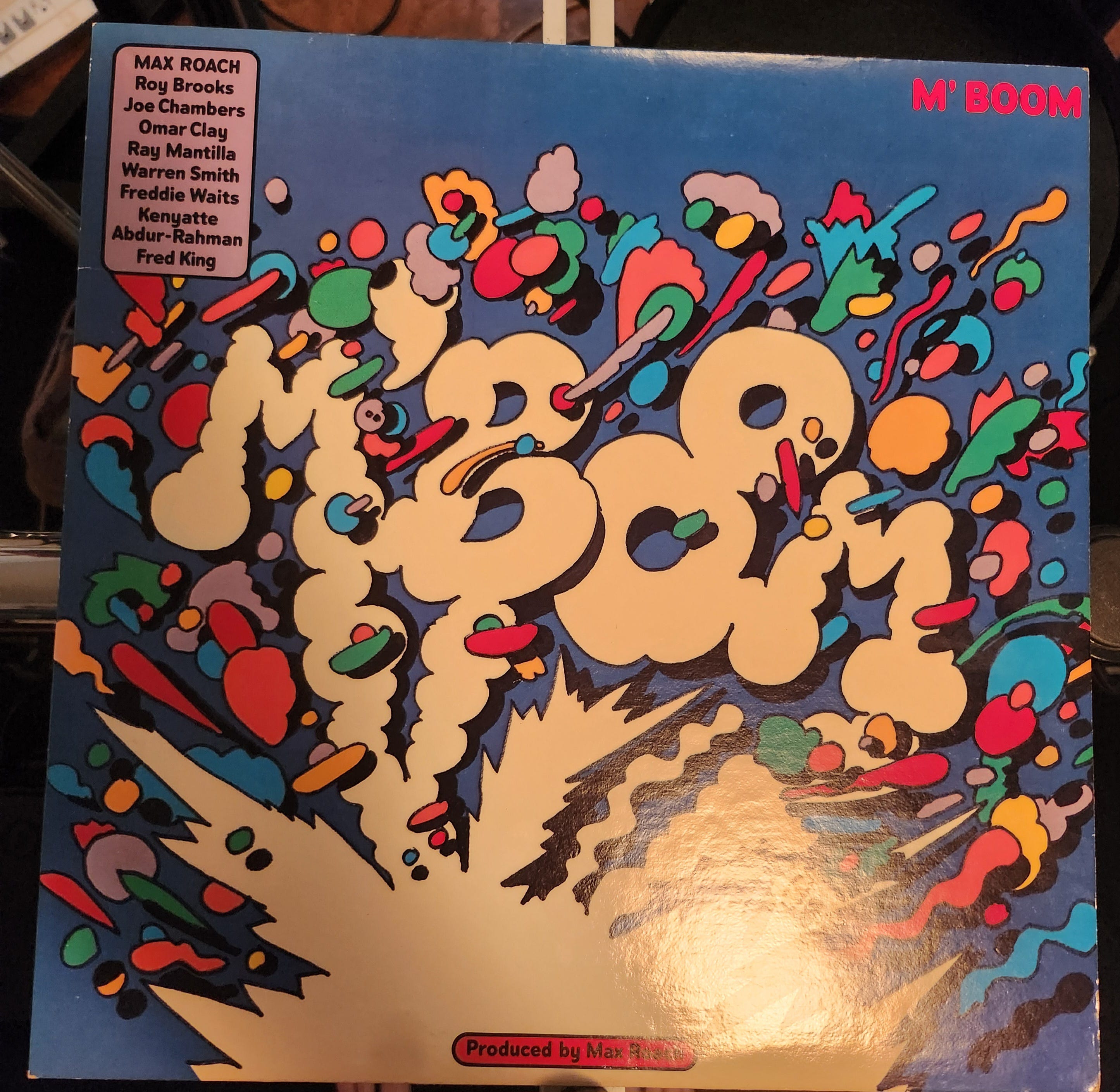
I can’t overstate how important this record is to me. Max Roach formed the group in 1970, the album was recorded in 1979, and released in 1980, when I first heard it. My consumption of it led directly (among other influences) to my forming a percussion ensemble in 1991. I hear this album as dance music.
In the liner notes Max wrote:
The purpose of organizing such a group was to develop a school of percussion music that was an outgrowth of our great American musical traditions.
The first task was the selection of percussionists who were not only composers and arrangers, but percussionists who had the technique to adequately handle the total percussion family, such as the Xylophone, the Tympani, the Marimba, etc., as well as a wide variety of percussion instruments of indeterminate pitch; and, they especially had to be fine “Drum set” performers.
The M’BOOM re: percussion ensemble uses more than 100 different instruments of determinate and indeterminate pitch.
It was my good fortune that I found the right people for M’BOOM the first time around.
Those people were and are Roy Brooks, Omar Clay, Fred King, Ray Mantilla, Warren Smith, Freddie Waits, Joe Chambers, and Kenyatte Abdur-Rahman.
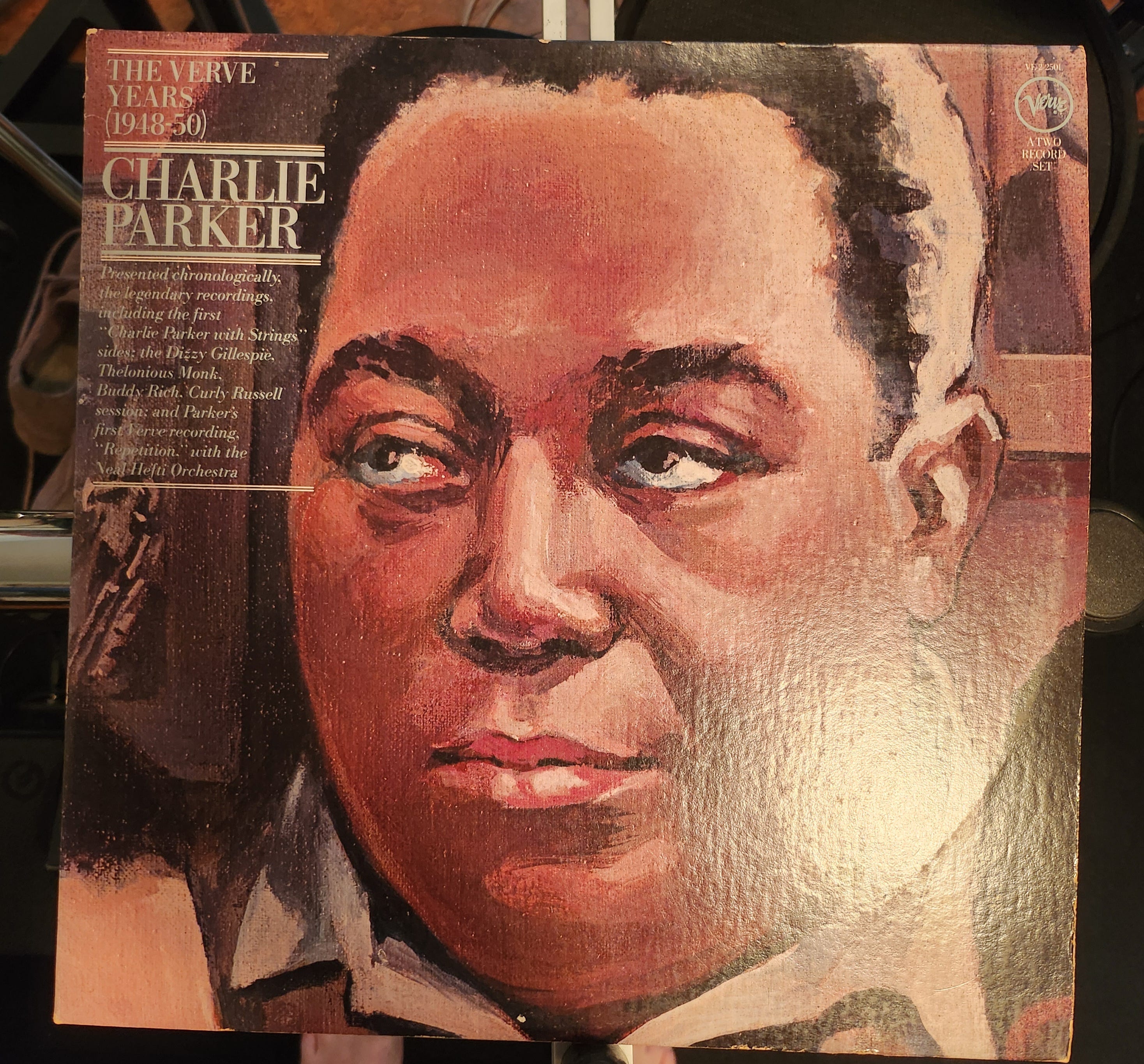
More from Max (from Spring, 1949)
On drumset, backing up Charlie Parker, along with Kenny Dorham, Tommy Turk, Al Haig, Tommy Potter, Carlos Vidal. The tunes: Cardboard, Visa, Segment, Passport.
Terje Rypdal: Whenever I Seem To Be Far Away
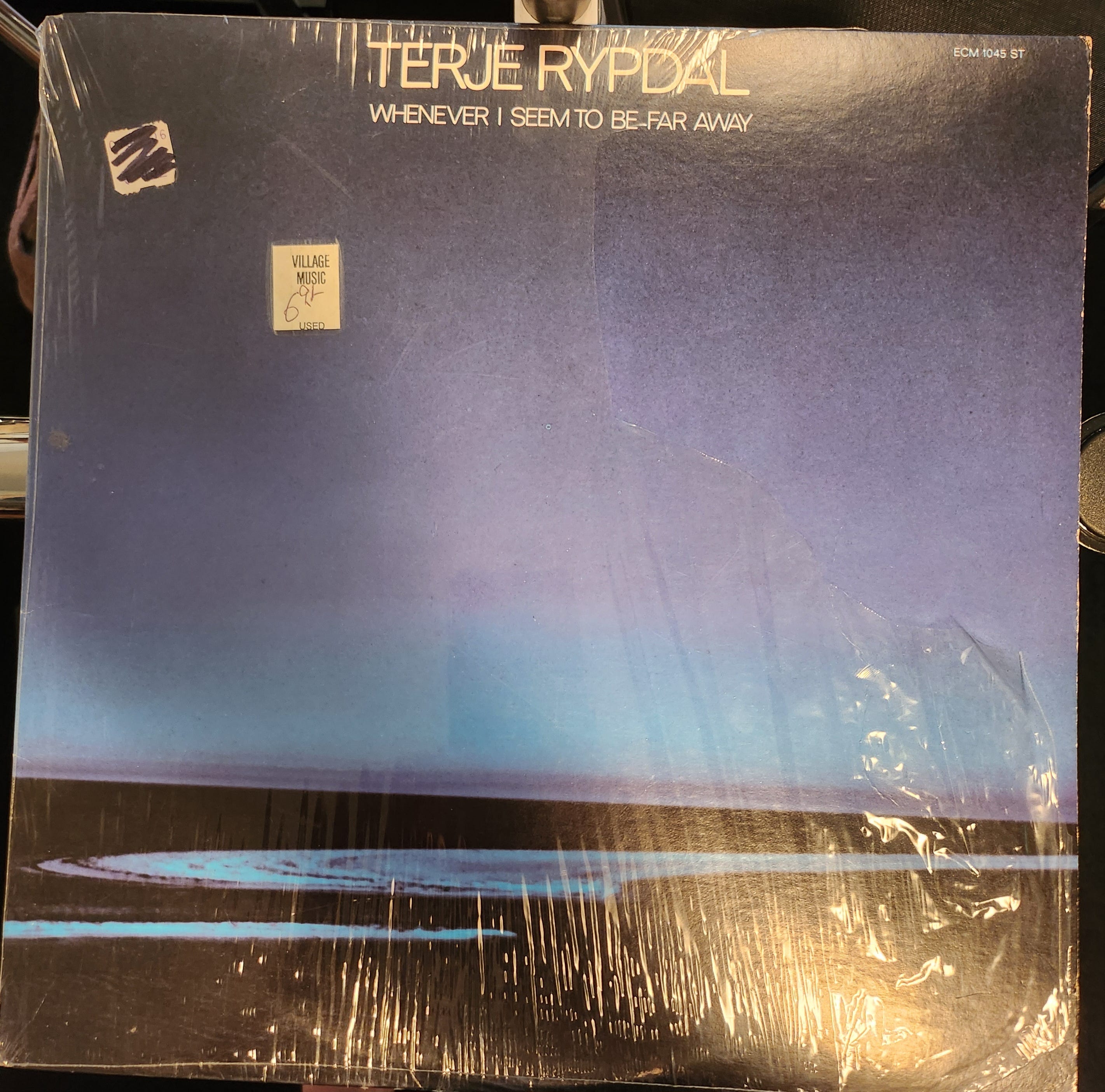
Norwegian guitarist Rypdal and his Stratocaster are joined by Jon Christensen, Odd Ulleberg, Pete Knutsen, Sveinung Hovensjo and members of the Sudfunk Symphony Orchestra. This 1974 release is among my favorites by Rypdal. He is a master of the unexpected sound and compositional left turn.
I also recommend his album Karta with Markus Stockhausen (trumpet), Arild Andersen (bass) and Patrice Heral (drums). I saw this group in concert at the Berlin Passionskirche in 2000. Indelible memory.
Here’s a review of the album by JazzTimes.
Stay alert.
Blair Helsing, Trained As A Journalist
— 30 —